<?xml version="1.0" encoding="utf-8"?><feed xmlns="http://www.w3.org/2005/Atom" ><generator uri="https://jekyllrb.com/" version="4.3.4">Jekyll</generator><link href="https://biomin.esc.cam.ac.uk/feed.xml" rel="self" type="application/atom+xml" /><link href="https://biomin.esc.cam.ac.uk/" rel="alternate" type="text/html" /><updated>2026-02-19T09:39:27+00:00</updated><id>https://biomin.esc.cam.ac.uk/feed.xml</id><title type="html">Shells • Oceans • Carbon</title><subtitle>Research, software, and news from the Lab.</subtitle><author><name>Oscar Branson</name><email>ob266@cam.ac.uk</email></author><entry><title type="html">PhD Student Wanted!</title><link href="https://biomin.esc.cam.ac.uk/job/biomin/leverhulme-phd3/" rel="alternate" type="text/html" title="PhD Student Wanted!" /><published>2025-08-01T00:00:00+01:00</published><updated>2025-08-01T00:00:00+01:00</updated><id>https://biomin.esc.cam.ac.uk/job/biomin/leverhulme-phd3</id><content type="html" xml:base="https://biomin.esc.cam.ac.uk/job/biomin/leverhulme-phd3/"><![CDATA[<p><em><strong>Modeling biomineralisation processes</strong></em></p>

<p>This PhD project is part of the cross-disciplinary project “<a href="/research/grant/biomin/geochem/leverhulme-project/">Building Shells: Towards a Mechanistic Understanding of Biomineralisation</a>” funded by the Leverhulme Trust.</p>

<p>The goal is to combine measurements of organism physiology, gene expression and skeletal geochemistry to create a quantitative computational model of biomineralisation processes in marine calcifying organisms.
This model will encode chemical, physical and biological processes associated with biomineralisation, and ultimately aims to predict the composition and formation rates of biominerals under different environmental conditions.</p>

<p><strong>Applications:</strong></p>

<p class="notice--warning"><strong>Applications for this position are now closed.</strong> Please see our <a href="/jobs">jobs page</a> for other opportunities.</p>

<h2 id="project-context">Project Context</h2>

<p>This PhD studentship is part of a large, cross-disciplinary project “<a href="/research/grant/biomin/geochem/leverhulme-project/">Building Shells: Towards a Mechanistic Understanding of Biomineralisation</a>” funded by the Leverhulme Trust.
This project will involve three postdoctoral researchers and three PhD students over the next five years, bringing together physiological, geochemical and computational approaches to advance our understanding of biomineralisation mechanisms.</p>

<h2 id="scientific-background">Scientific Background</h2>

<p>Calcium carbonate shells formed by marine organisms play critical roles in Earth’s past, present and future climate.
Shells in the modern ocean are key determinants of how much carbon the ocean absorbs, and therefore the trajectory of atmospheric CO<sub>2</sub> in the coming decades.
Shells in ancient oceans record environmental conditions in their trace chemical and isotopic composition, providing invaluable ‘proxy’ archives that underpin our understanding of how climate responds to major perturbations.
The state-of-the-art in both predicting future calcification and inferring past climate conditions relies upon empirical relationships being extrapolated beyond the conditions that they were established in.
This approach receives substantial attention and investment, but is limited by a key knowledge gap: we do not know how these ‘biominerals’ form.
Specifically, we lack a mechanistic understanding of biomineralisation that can quantitatively predict their formation rates and composition in known environmental conditions.
Without this, we cannot assess the validity of our empirical extrapolations, or even determine the sources or magnitude of the uncertainties inherent in them.
This places fundamental limits on our ability to predict the response of biominerals to future climate change, and infer past climatic conditions from their fossil composition.</p>

<p>A complete understanding of biomineralisation mechanisms has remained elusive for two key reasons.
First, decades of focused research has been restricted to disciplinary silos.
Biologists have focussed on the physiology and architecture of biomineralisation, mineralogists have advanced our understanding of precipitation processes, and geochemists have established empirical links between the environment and biomineral composition.
Second, biomineralisation involves the confluence of these processes at the nanometre to sub-nanometre scale in delicate, transitory environments that remain beyond the limits of our observational techniques.
The “<a href="/research/grant/biomin/geochem/leverhulme-project/">Building Shells</a>” project proposes to surpass these disciplinary and technical boundaries by combining measurements of biomineral geochemistry, organism physiology and gene expression with Bayesian statistical techniques to derive a quantitative understanding of the underlying mechanisms of biomineralisation.</p>

<p>This PhD project will focus on bringing together the geochemical and physiological measurements made by the other project members to create a quantitative model of biomineralisation processes.</p>

<h2 id="specific-phd-project-description">Specific PhD Project Description</h2>

<p>The PhD student will work closely alongside an existing team of three postdoctoral researchers and two PhD students, to model the biomineralisation processes of corals, foraminifera and coccolithophores that have been grown under conditions designed to examine the pathways of ion transport and the processes of crystal growth in biomineralisation.</p>

<figure style="width: 100%" class="align-center">
  <!-- <img src="https://biomin.esc.cam.ac.uk/assets/images/bio-Madi-coral.png" alt="Coral close-up"> -->
  <img src="/assets/images/posts/phd1-culturing.png" alt="Foraminifera and coral culturing" />
  <figcaption>Capturing foraminifera in the field (left) and growing corals in the lab (right).</figcaption>
</figure>

<h2 id="training-provided">Training Provided</h2>

<ul>
  <li>Computational modelling methods:
    <ul>
      <li>Coding in Python/Julia.</li>
      <li>Markov Chain Monte Carlo methods for Bayesian inference.</li>
    </ul>
  </li>
  <li>Biogeochemical data analysis:
    <ul>
      <li>How to code up and explore interacting biological, chemical and physical processes.</li>
    </ul>
  </li>
  <li>Data analysis and interpretation.</li>
  <li>Scientific presentation and writing.</li>
</ul>

<h2 id="applications">Applications</h2>

<p>An <strong>ideal applicant</strong> will have a strong background in computing, mathematics and/or natural sciences (chemistry, biology, Earth sciences, physics, etc.), and some or all of:</p>
<ul>
  <li>Experience in computational modelling applied to biological/chemical systems.</li>
  <li>Experience interpreting and analysing biogeochemical data.</li>
</ul>

<p>If you’d like to find out more about what it’s like to work here, please feel free to contact <a href="/people/">anyone on the team</a> and ask us anything!</p>

<h3 id="application-instructions">Application Instructions</h3>
<p>Applications should be submitted via the <a href="https://apply.postgraduate.study.cam.ac.uk">University of Cambridge Graduate Application Portal</a>.
However, please <a href="mailto:ob266@cam.ac.uk">get in touch</a> before applying, if you are interested. <strong>If you don’t contact me in advance, we may miss your application!</strong></p>

<p>General instructions for the application portal can be found <a href="https://www.postgraduate.study.cam.ac.uk/application-process/how-do-i-apply">here</a>, but a few specifics steps for applying to this project are:</p>

<ol>
  <li>In the ‘Research’ section of ‘Course Application’ select ‘Yes’ in reply to ‘Do you have any research information to add?’, then give the title of this project (‘Modeling biomineralisation processes.’) and my name (‘Oscar Branson’) as the supervisor. You do not need to put anything in the ‘summary of proposed research’ box, but please do list any experience you have that’s relevant to the project in the ‘Research Experience’ box.</li>
</ol>

<p><a href="https://www.postgraduate.study.cam.ac.uk/courses/directory/eaespdpea/apply" class="btn btn--info">Apply Here</a></p>

<p>Please <a href="mailto:ob266@cam.ac.uk">get in touch</a> if you have any questions.</p>]]></content><author><name>Oscar Branson</name><email>ob266@cam.ac.uk</email></author><category term="job" /><category term="biomin" /><summary type="html"><![CDATA[Modeling biomineralisation processes.]]></summary></entry><entry><title type="html">New Paper: Forams are what they eat.</title><link href="https://biomin.esc.cam.ac.uk/research/paper/physiology/biomin/foram/nitrogen-diet/" rel="alternate" type="text/html" title="New Paper: Forams are what they eat." /><published>2025-01-07T00:00:00+00:00</published><updated>2025-01-07T00:00:00+00:00</updated><id>https://biomin.esc.cam.ac.uk/research/paper/physiology/biomin/foram/nitrogen-diet</id><content type="html" xml:base="https://biomin.esc.cam.ac.uk/research/paper/physiology/biomin/foram/nitrogen-diet/"><![CDATA[<p>Being heterotrophic like us, foraminifera consume, digest, and grow using nutrients derived from the breakdown of their food. In this paper, we track how nitrogen (N) from food is incorporated into living foraminifera. By feeding them copepods (tiny crustaceans) with specific N isotopic compositions, we were able to investigate the pathways through which food-derived N is translocated into foraminiferal biomass and, ultimately, into the organic layers embedded within their calcite shells.</p>

<p>We found that the N isotopic signals of both foraminiferal biomass and shell evolve towards those of their food sources, indicating the incorporation of food-derived N into foraminifera. For the biomass, its N isotopic signals are well modelled as a mixture between the original biomass and newly metabolised food intake, until they reach that of the food source but never exceed it. In addition, the increase in N content is comparable to the feeding rate. Together, these observations suggest a closed N system in foraminifera with minimal N leakage to the environment.</p>

<p>Similarly, the N isotopic signals in shells quickly approach those of the food sources. However, shell signals deviate from biomass signals and are constantly closer to those of the food. We attribute this discrepancy between biomass and shell N signals to their different incorporation pathways. Specifically, newly metabolised food-derived N is directly incorporated into the shell without first mixing with the foraminiferal bulk biomass.</p>

<p>Our findings validate the correlation between the N isotopic signals of foraminifera and their food sources, supporting the use of their shells as proxies to reconstruct past changes in nutrient sources and surface ocean nutrient cycling.</p>

<h3 id="read-the-paper"><a href="https://doi.org/10.1016/j.epsl.2025.119231">Read the paper</a></h3>]]></content><author><name>Wei Ning &quot;Winnie&quot; Fang</name></author><category term="research" /><category term="paper" /><category term="physiology" /><category term="biomin" /><category term="foram" /><summary type="html"><![CDATA[How the isotopes of nitrogen in foraminifera food get into their shells]]></summary></entry><entry><title type="html">PostDoc Wanted!</title><link href="https://biomin.esc.cam.ac.uk/job/leverhulme-PDRA3/" rel="alternate" type="text/html" title="PostDoc Wanted!" /><published>2024-10-29T00:00:00+00:00</published><updated>2024-10-29T00:00:00+00:00</updated><id>https://biomin.esc.cam.ac.uk/job/leverhulme-PDRA3</id><content type="html" xml:base="https://biomin.esc.cam.ac.uk/job/leverhulme-PDRA3/"><![CDATA[<p>I am seeking a postdoctoral research associate (PDRA) to join the multidisciplinary project “<a href="/research/grant/biomin/geochem/leverhulme-project/">Building Shells: Towards a Mechanistic Understanding of Biomineralisation</a>” funded by the Leverhulme Trust.</p>

<p><strong>Applications:</strong></p>

<p class="notice--warning"><strong>Applications for this position are now closed.</strong> Please see our <a href="/jobs">jobs page</a> for other opportunities.</p>

<h2 id="project-scope">Project Scope</h2>

<p>The successful candidate will work closely with the <a href="/oscar-branson">PI</a> and a <a href="/job/biomin/leverhulme-phd3/">PhD student</a> to construct a quantitative computational model of the biological, chemical and physical mechanisms of biomineralisation.</p>

<p>The model will be informed by physiological and geochemical measurements from samples grown under controlled conditions designed to reveal the underlying mechanisms of biomineralisation in marine calcifying organisms.</p>

<p>The ultimate goal of the model is to create a general framework for predicting the composition and formation rates of biominerals as a function of taxonomy and environmental conditions.</p>

<h2 id="how-does-this-fit-into-the-building-shells-project">How does this fit into the ‘Building Shells’ project?</h2>

<p>The PDRA would join a cross-disciplinary project team consisting of four PDRAs, three PhD students and numerous (international) collaborators.
The project aims to bring together physiological, geochemical and computational approaches to advance our understanding of biomineralisation mechanisms over the next four years.</p>

<p>The task of this PDRA is to take the physiological and geochemical measurements made by the other project members and use them to construct a quantitative model of biomineralisation processes.
They will be responsible for developing and delivering the key outcome of the project.</p>

<h2 id="what-sort-of-person-am-i-looking-for">What sort of person am I looking for?</h2>

<p>I’m looking for someone who has (or is about to obtain) a PhD in the broad area of Computational Modelling applied to geochemical or biological systems.</p>

<p>The project will involve integrating complex biological (transcriptome, proteome, physiology) and geochemical (trace element and isotopic ratios) data to derive a quantitative understanding of biomineralisation mechanisms.
The design of the model must also be informed by the physical and chemical processes that underpin biomineralisation, and be constructed in context of extensive literature in this field.</p>

<h2 id="relevant-reading">Relevant Reading</h2>

<p>Some interesting models of biomineralisation processes:</p>

<ul>
  <li><a href="https://doi.org/10.1016/0012-821X(96)00105-7">Rayleigh fractionation in foraminifera.</a></li>
  <li><a href="https://doi.org/10.1029/2021GC010200">Stable isotopes in calcite.</a> (and <a href="https://doi.org/10.1016/j.epsl.2014.07.036">this</a>)</li>
  <li><a href="https://doi.org/10.1016/j.gca.2018.02.032">Stable isotopes in coral aragonite.</a></li>
  <li><a href="https://doi.org/10.1038/s43247-023-01194-6">Strontium in foraminifera.</a></li>
  <li><a href="https://doi.org/10.1016/j.epsl.2020.116662">Boron transport in cold-water corals.</a></li>
  <li><a href="https://doi.org/10.1038/ncomms14511">Stable isotopes in coccolithophores.</a></li>
</ul>

<h2 id="how-do-i-find-out-more">How do I find out more?</h2>

<p>Please <a href="mailto:ob266@cam.ac.uk">get in touch</a> if you’d like to find out more about the project, or discuss your suitability for it.</p>

<p>If you’d like to find out more about what it’s like to work in the Department, and specifically with me, feel free to contact any of the <a href="/people">current lab members</a>. In particular, <a href="/people/2023-Alice-Ball">Alice Ball</a>, <a href="/people/2024-Duygu-Sevilgen">Duygu Sevilgen</a>, <a href="/people/2024-Nishant-Chauhan">Nishant Chauhan</a> and <a href="/_people/2024-Pratyusha-Madhnure.md">Pratyusha Madhnure</a> are all currently working on the physiological and geochemical aspects of the project, and would be happy to discuss their experiences.</p>

<p>You can also find out more about being a PDRA in the University and Department in the Further Particulars document <a href="https://www.jobs.cam.ac.uk/job/45856/file/Branson+-+PDRA+FPs_FINAL.pdf">here</a>.</p>

<h2 id="logistical-details">Logistical Details</h2>

<p>The post is funded for three years, and the candidate <em>must</em> be able to start before 1st October 2025 to fit within funding constraints.</p>

<p class="notice--warning"><strong>Applications for this position are now closed.</strong></p>]]></content><author><name>Oscar Branson</name><email>ob266@cam.ac.uk</email></author><category term="job" /><summary type="html"><![CDATA[Modeling biomineralisation processes.]]></summary></entry><entry><title type="html">Corals, ‘cology and Cool Coasts</title><link href="https://biomin.esc.cam.ac.uk/workshop/bios-cre/" rel="alternate" type="text/html" title="Corals, ‘cology and Cool Coasts" /><published>2024-08-06T00:00:00+01:00</published><updated>2024-08-06T00:00:00+01:00</updated><id>https://biomin.esc.cam.ac.uk/workshop/bios-cre</id><content type="html" xml:base="https://biomin.esc.cam.ac.uk/workshop/bios-cre/"><![CDATA[<p>The <a href="https://bios.asu.edu/">Bermuda Institute of Ocean Science</a>, known by those in a hurry as BIOS, is a marine science research institute with a long history of oceanography and marine biology. Home to one of the longest-running time series of biogeochemical measurements, BIOS questions how climate change will affect the world’s oceans and marine ecosystems.</p>

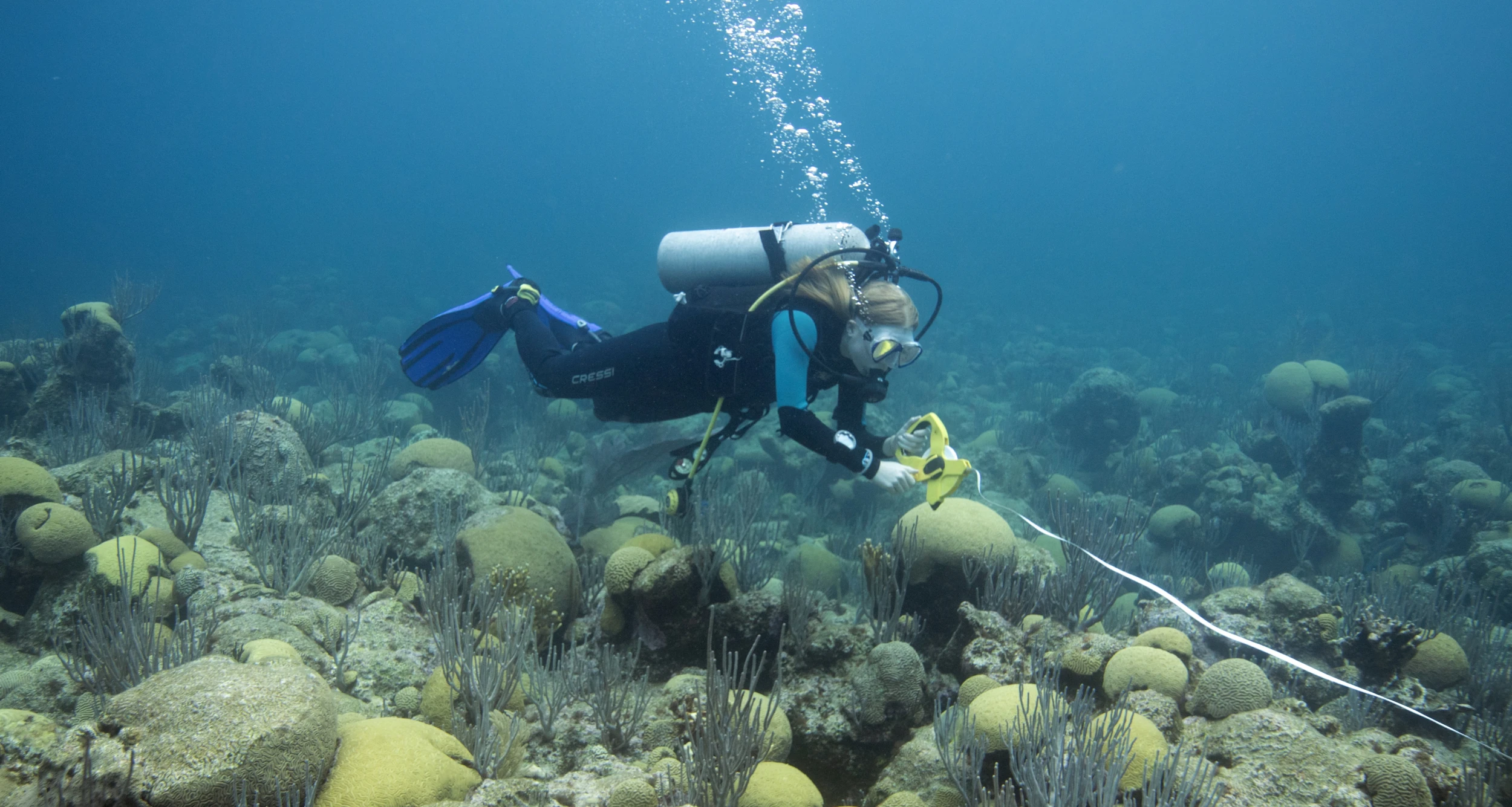
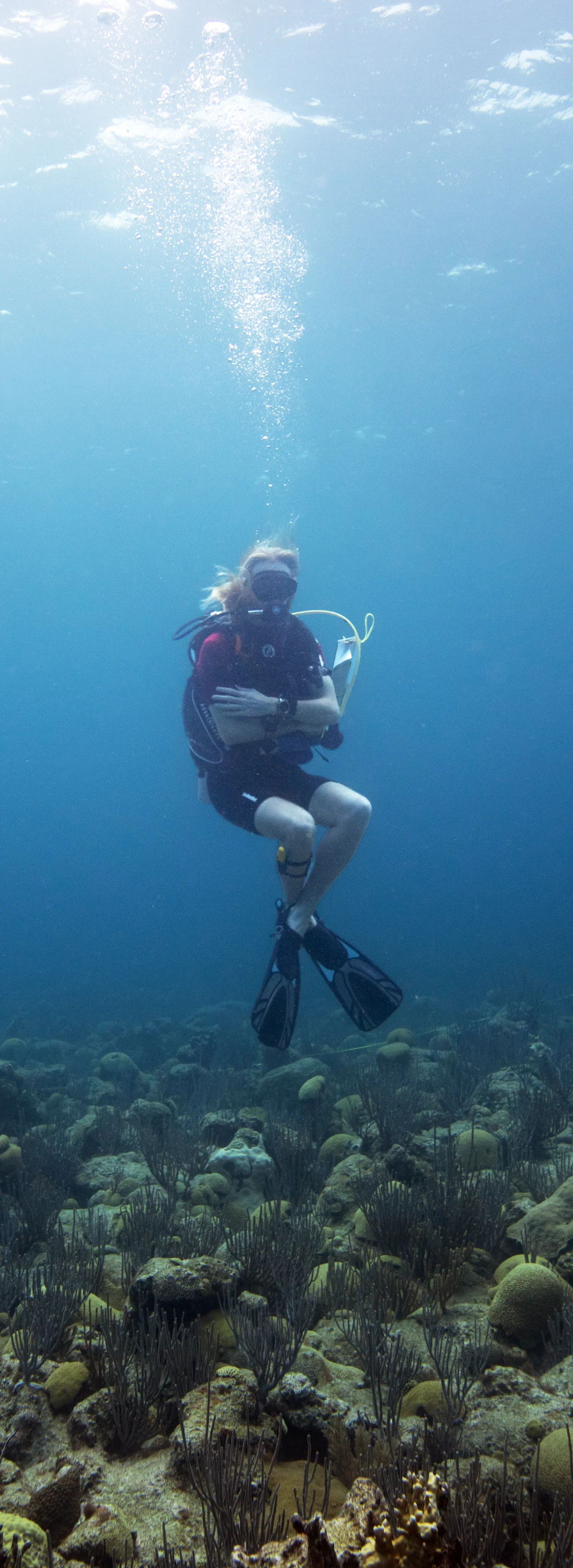
<p>BIOS consists of several research labs led by principal investigators who mentor graduate students, postdoctoral researchers, and interns across various intakes throughout the year. The institute also offers courses to undergraduates and grad students, or anyone else with a keen interest in marine science. Naturally, we jumped at the opportunity to participate in ‘Coral Reef Ecology’, a three-week intensive field- and lecture-based course taught by <a href="https://bios.asu.edu/about/team-members/eric-hochberg/">Dr. Eric Hochberg</a>.</p>

<figure style="width: 100%" class="align-center">
  <img src="/assets/images/posts/bios-cre/alice_transect.webp" alt="Alice rolling up a transect line while SCUBA diving" style="width:82.5%" />
  <img src="/assets/images/posts/bios-cre/vertical_dive.webp" alt="Orlando imitating a pelagic organism, floating upright while SCUBA diving" style="width:16.2%" />
  <figcaption>
  <strong> Scientific diving on the reef (and slightly less scientific floating).</strong> 
  </figcaption>
</figure>

<p>Following introductions over drinks to our fellow 15 students on BIOS’ sunny water-facing terrace, the next three weeks flew by in a blur of boat trips, classroom discussions, ex-situ measurements of coralgal community metabolism in a flume (a large bathtub for corals with a steady circular flow of water), and evening lectures. Each activity helped develop specific skills necessary for research into shallow benthic organisms and the communities they comprise. For example, daily trips by boat out to different reef sites allowed us to measure – and then debate! – the composition of Bermuda’s unique reef ecosystems while practising our scientific diving skills; the hands-on flume measurements gave insights into how a great deal of lab-based coral research is conducted; and lectures and discussions taught us the scientific and technical concepts underpinning it all.</p>

<p>A key takeaway from the course was the consideration of reefs as entire holistic systems, rather than focusing on individual coral organisms or taxa: as is common in coral reef science and related conservation activities. Eric was quick to point out common (mis?)conceptions of reef science today. For example, he challenged the notion that coral reefs could be described “rainforests of the sea” since some high-productivity reefs may in fact comprise very low diversity of organisms; that coral reefs should even be referred to as ‘coral reefs’ at all given the often relatively low coral cover on geological formations which serve as reefs; and that the ‘health’ of a reef is useful concept, given that it is poorly defined – if defined at all – in the literature and often fails to capture the full picture of the complex ecosystem.</p>

<p>The course wrapped up with group presentations covering various aspects of the field and laboratory work we’d conducted. These included comparisons of pros and cons of in-situ benthic survey methods (transects, quadrats, and photomosaics), benthic ecology and coral diversity across different reef areas, coral metabolism over a diel cycle from flume measurements, and respiration and photosynthesis of an in-situ community measured by a gradient flux.</p>

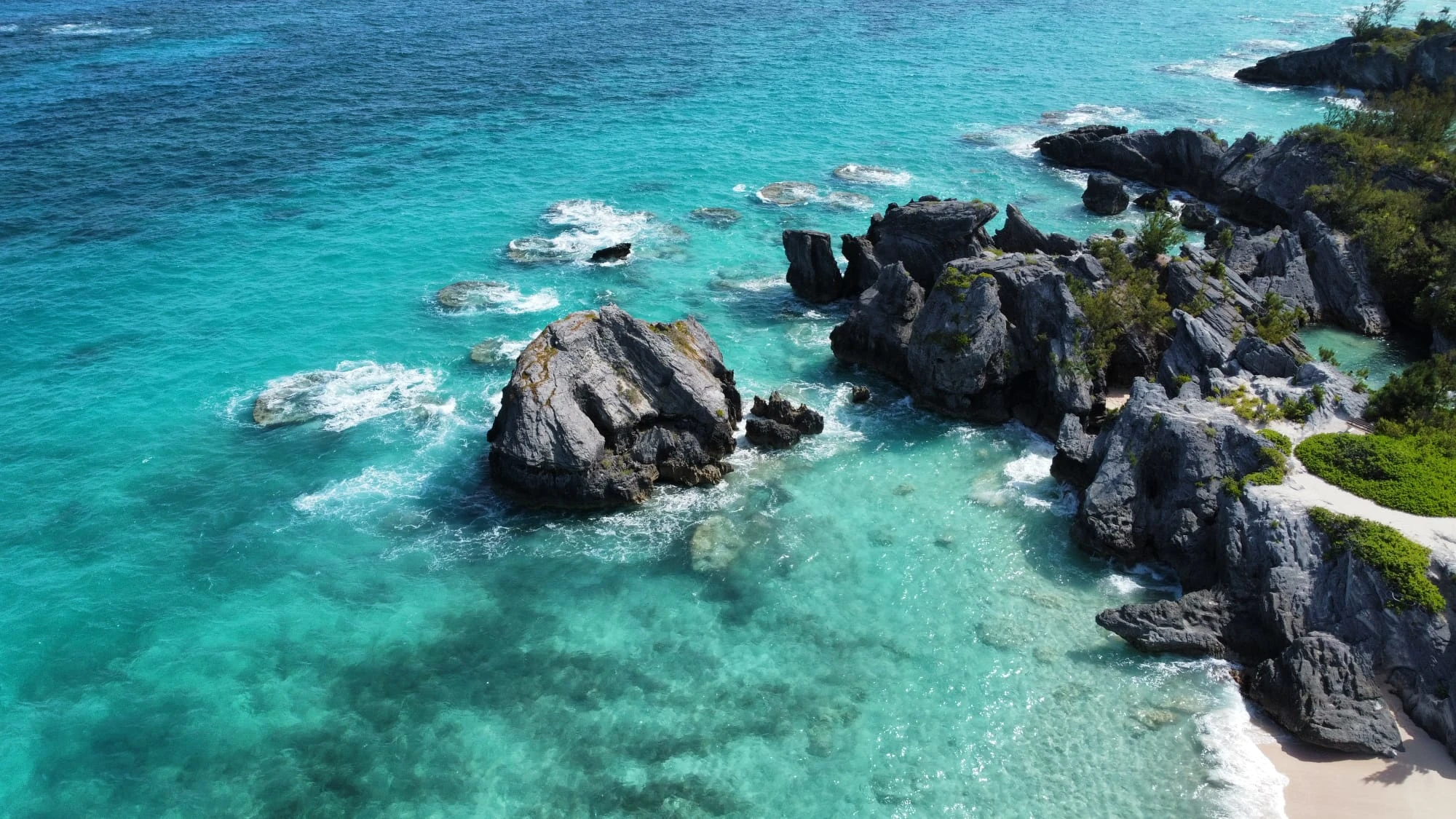
<p>Of course, the group made sure to pack exploration away from campus into any spare hours! In Bermuda you’re never far from caves, cliffs, and ‘cukes’ (sea cucumbers), and we certainly made the most of it. Time off was spent exploring caves (and meeting their inhabitants, not always intentionally), admiring the rock formations in the cliffs (sometimes while jumping off them), chilling with the sea cucumbers, swimming with bioluminescent dinoflagellates, and snorkelling until we were breathing saltwater (and were 99% salt).</p>

<figure style="width: 100%" class="align-center">
  <img src="/assets/images/posts/bios-cre/Jobsons_drone.webp" alt="Aerial image of whiteish-pink beaches, clear blue water, and grey rocky outcrops" style="width:100%" />
  <figcaption>
  <strong> Making the most of Bermuda's beautiful coasts. </strong>
  </figcaption>
</figure>

<p>BIOS receives generous funding from the UK Associates of BIOS, a collection of corporate and personal donors. We’d like to thank the UK Associates for making our time on the Reef Ecology course possible. The opportunity to witness the day-to-day life of a major marine institute, to meet people from diverse walks of life sharing a common passion, and to challenge our perceptions of the function of reef ecosystems resulted in a truly unforgettable experience.</p>]]></content><author><name>Alice Ball and Orlando Timmerman</name></author><category term="workshop" /><summary type="html"><![CDATA[A Deep Dive into Coral Ecology at the Bermuda Institute of Ocean Science.]]></summary></entry><entry><title type="html">New Paper: Li in Calcite.</title><link href="https://biomin.esc.cam.ac.uk/research/paper/precip/lithium-calcite/" rel="alternate" type="text/html" title="New Paper: Li in Calcite." /><published>2024-08-04T00:00:00+01:00</published><updated>2024-08-04T00:00:00+01:00</updated><id>https://biomin.esc.cam.ac.uk/research/paper/precip/lithium-calcite</id><content type="html" xml:base="https://biomin.esc.cam.ac.uk/research/paper/precip/lithium-calcite/"><![CDATA[<p>In this paper we looked into how lithium (Li) is incorporated as a trace element in calcite, and how its incorporation and isotopic fractionation are affected by the conditions of precipitation. Specifically, we varied temperature, pH and dissolved inorganic carbon (DIC) concentration, and looked at how the partitioning and isotopic frationation of Li between the fluid and the solid.</p>

<p>We found that the partitioning of Li into calcite is significantly influenced by pH, while dissolved inorganic carbon (DIC) plays a smaller role. Both of these relationships are explained by an underlying control of mineral precipitation rate on Li incorporation - more Li is incorporated into the mineral at faster growth rates.</p>

<p>Surprisingly, we found that isotopic fractionation of Li did not follow any consistent trends across varying experimental conditions.
This is quite different to past studies, which found some strong environmental controls on Li isotopic fractionation into calcite. It’s not completely clear why our results were so different to previous studies, but it could relate to different experimental conditions, such as the ionic strength of the solutions in which the precipitates were formed.</p>

<p>These findings have significant implications for the use of Li isotopes in marine carbonates as proxies for past environmental conditions. The lack of any significant environmental influence on Li isotopes is good news for those seeking to use Li isotopes in marine carbonates as a proxy for past seawater composition, but our understanding of Li incorporation and isotopic fractionation is still far from complete, and further research is needed to fully understand the processes involved.</p>

<h3 id="read-the-paper"><a href="https://doi.org/10.1016/j.gca.2024.07.001">Read the paper</a></h3>]]></content><author><name>Oscar Branson</name><email>ob266@cam.ac.uk</email></author><category term="research" /><category term="paper" /><category term="precip" /><summary type="html"><![CDATA[Precipitation rate affects Li incorporation, but not isotopic fractionation.]]></summary></entry><entry><title type="html">A Considerably Constructive Coral Conference: ECRS 2024</title><link href="https://biomin.esc.cam.ac.uk/conference/global/ecrs-summary/" rel="alternate" type="text/html" title="A Considerably Constructive Coral Conference: ECRS 2024" /><published>2024-07-12T00:00:00+01:00</published><updated>2024-07-12T00:00:00+01:00</updated><id>https://biomin.esc.cam.ac.uk/conference/global/ecrs-summary</id><content type="html" xml:base="https://biomin.esc.cam.ac.uk/conference/global/ecrs-summary/"><![CDATA[<p>Eight trains, five countries, and a few days after leaving Cambridge I found myself in Naples, Italy, for the 2024 <a href="https://ecrs2024.eu/">European Coral Reef Symposium (ECRS)</a>. The European chapter of the international society, <a href="https://coralreefs.org/">ICRS</a> (no prizes for guessing the acronym!), the ECRS pops up somewhere in Europe once every four years, offset by two years from ICRS. Considering timing within my PhD, location, and keynotes, it was clear that it’d be an experience to write home about.</p>

<p>I attended ECRS to fill in the coral-loving world on my work <a href="https://orlando-code.github.io/research.html"><em>predicting where coral will survive best in futures experiencing the environmental conditions caused by anthropogenic climate change</em></a>. The objective here is to guide our precious reef conservation efforts to those areas where corals are most likely to survive under climate change. This requires robust predictions of environmental suitability at spatial scales relevant to these conservation projects.</p>

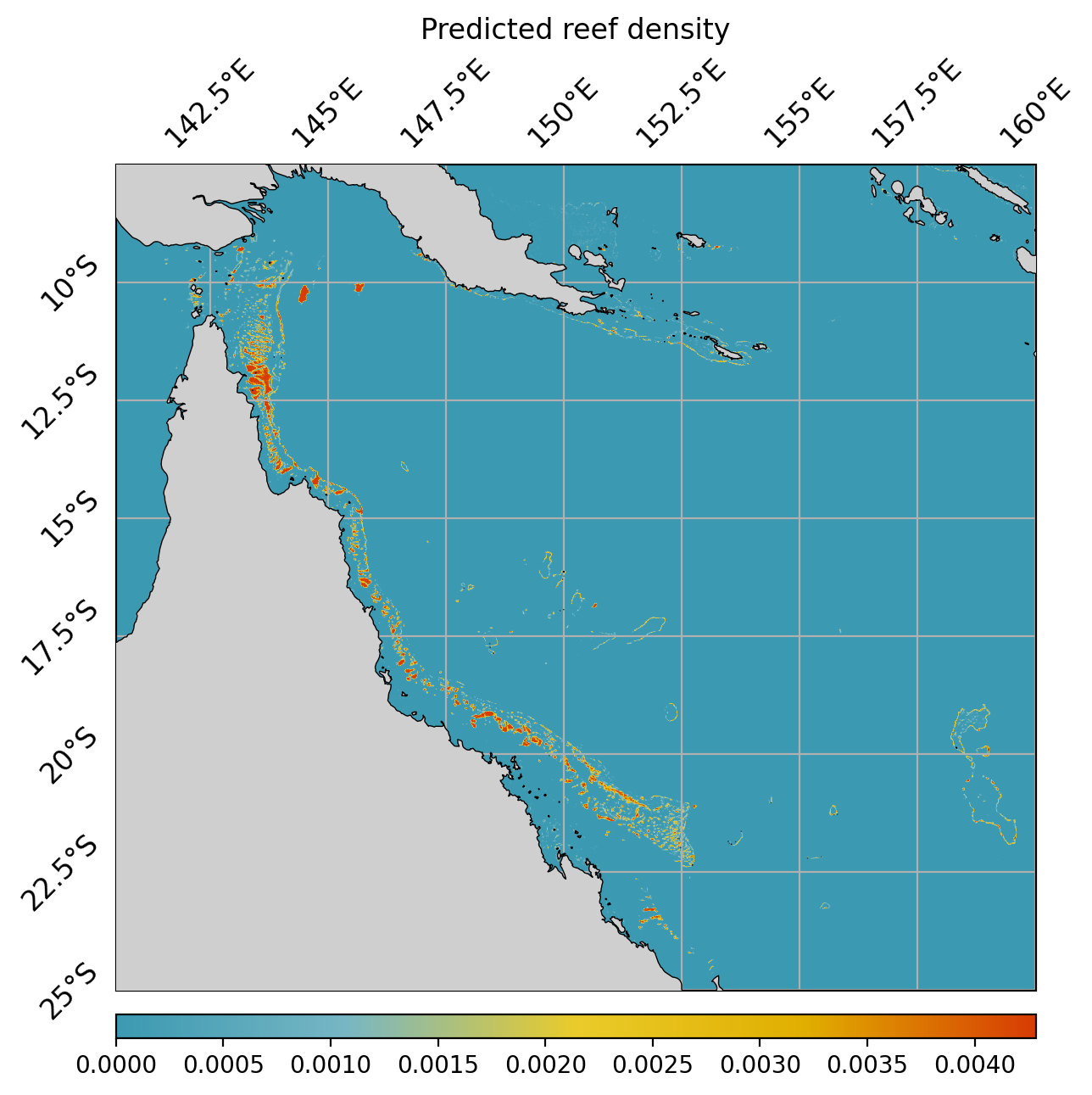
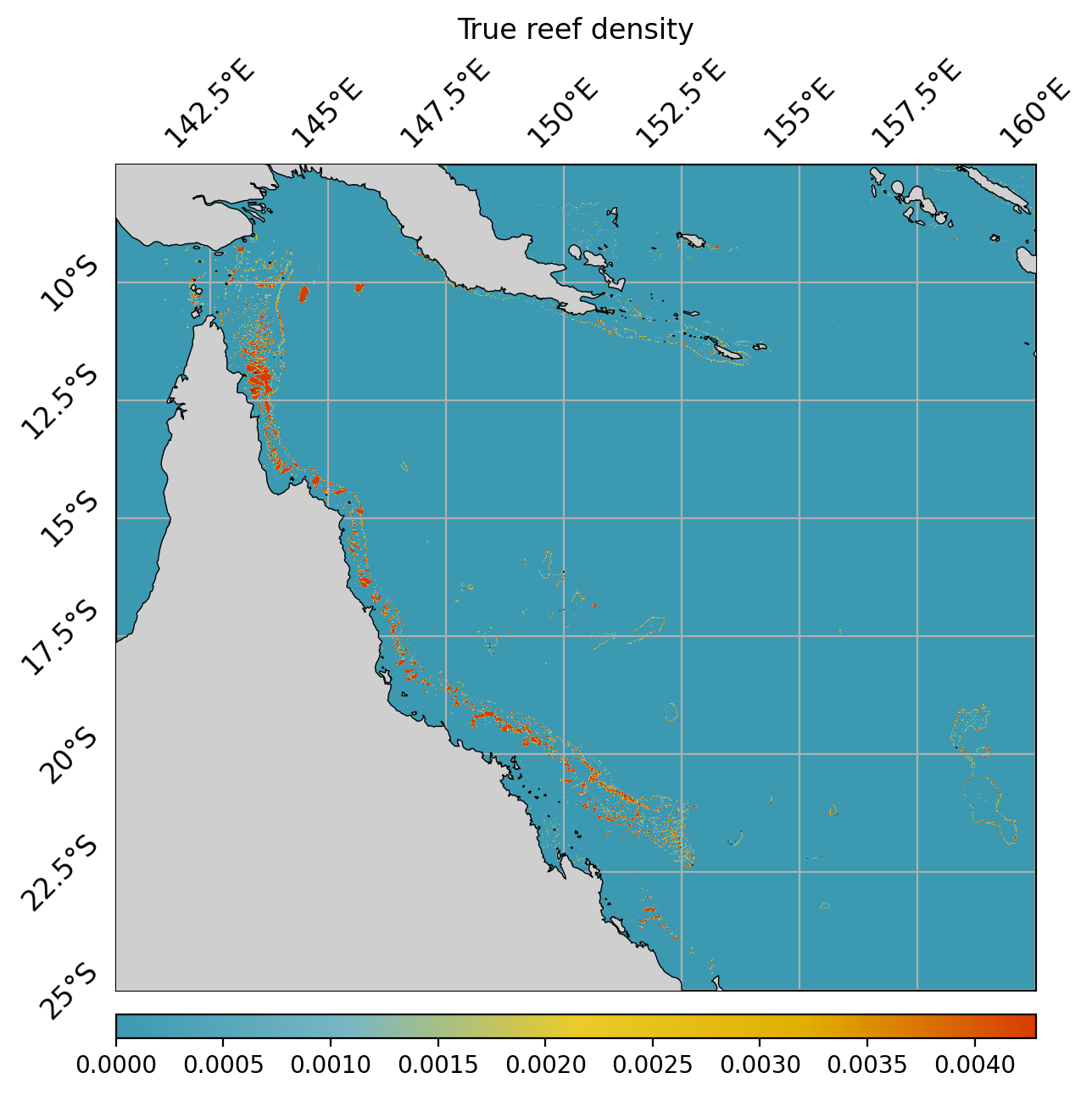
<p>While it’s quite the challenge, initial results look promising. In short, a fairly simple machine learning model is able to nicely recreate the distribution of reefs that it would expect to see, given only information about depth, and how warm, how salty, how fast-moving, how sunny (et cetera et cetera) the oceans off Australia have been over the last ~150 years.</p>

<figure style="width: 100%" class="align-center">
  <img src="/assets/images/posts/ecrs_summary/GBR_predicted.png" alt="Prediction of reef distribtuion by machine learning model (similar to observed)." style="width:49%" />
  <img src="/assets/images/posts/ecrs_summary/GBR_true.png" alt="Observed present-day reef distribution (similar to predicted)." style="width:49%" />
  <figcaption>
  <strong> Model prediction of Great Barrier Reef.</strong> Left: Model prediction of coral density based on historic environmental timeseries. Right: Observed geographical distribution of the present-day reef.
  </figcaption>
</figure>

<figure style="width: 100%" class="align-center">
  <img src="/assets/images/posts/ecrs_summary/zGBR_predicted.png" alt="Prediction of reef distribtuion by machine learning model (similar to observed)." style="width:49%" />
  <img src="/assets/images/posts/ecrs_summary/zGBR_true.png" alt="Observed present-day reef distribution (similar to predicted)." style="width:49%" />
  <figcaption>
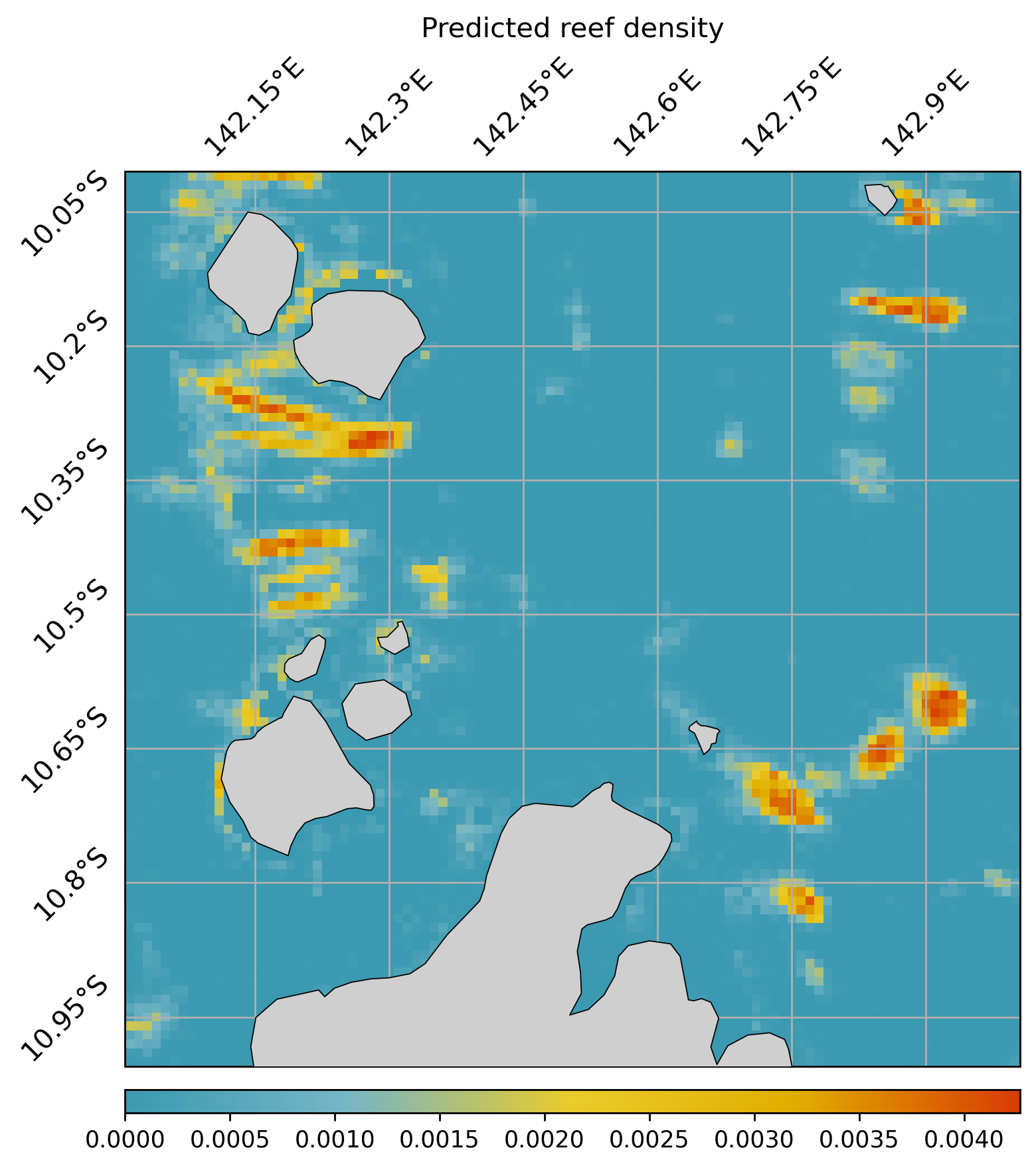
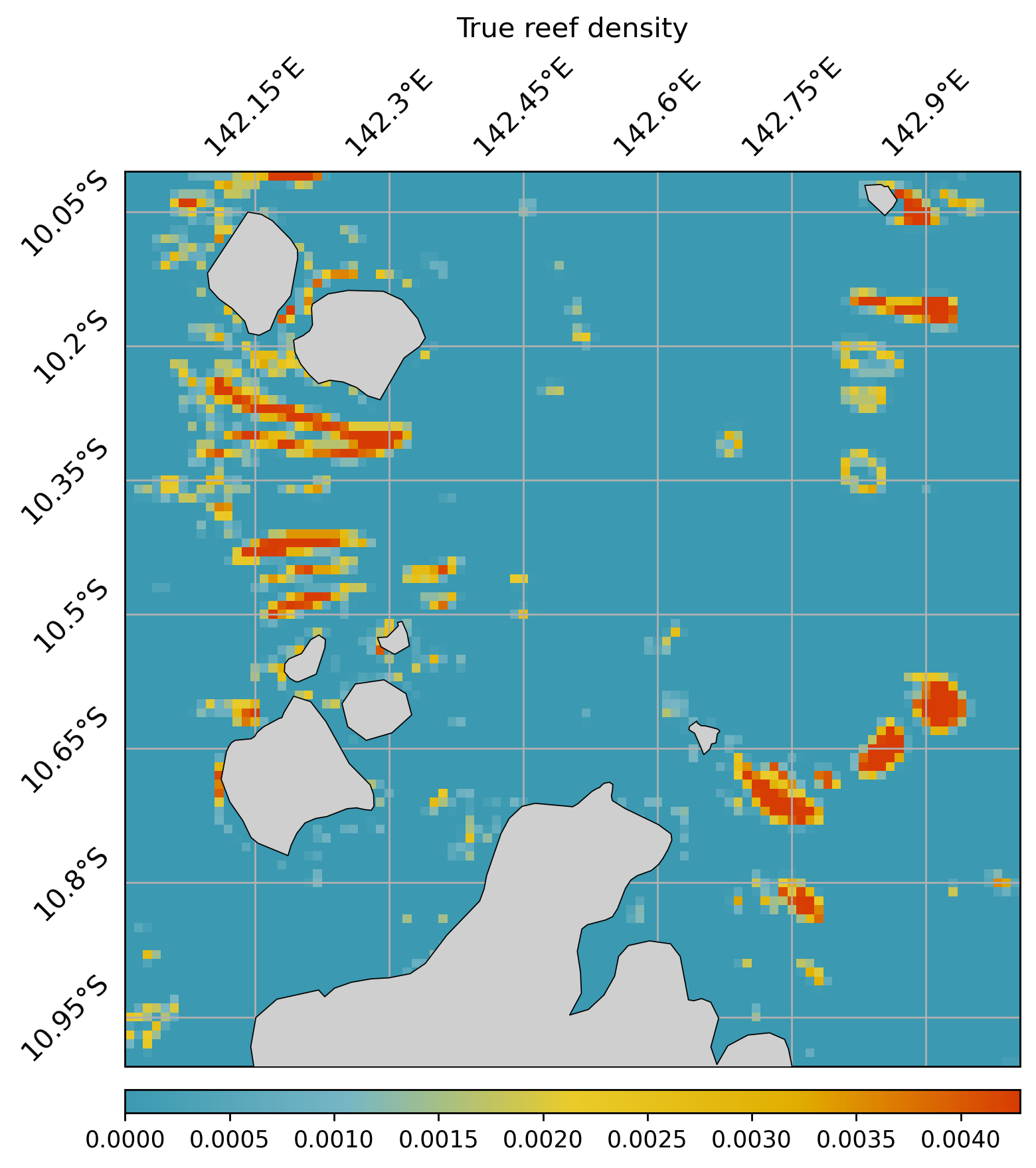
  <strong> Zooming in on the model prediction of Great Barrier Reef.</strong> Left: Model shies away from predicting the highest-density coral areas, and edges of coral patches. Right: Observed geographical distribution of the present-day reef.
  </figcaption>
</figure>

<p>How do we know this information? Climate models! The beauty of being able to learn the conditions favoured by corals from these is that these models also contain our best guess as to what these conditions will look like far into the future as a result of various different roadmaps of greenhouse gas emissions. The ability to predict present-day coral coverage from this data therefore indicates that we can predict (under certain assumptions) where conditions will be favourable in the coming century. Longtermist conservation projects here we come!</p>

<p>If you’re interested in learning more (or just enjoy animation), check out <a href="https://orlando-code.github.io/research.html">my website</a> for slide decks and more detail. You can also use the site to get in touch: I’d love to hear from you!</p>

<p>Of course, my presentation was just one of many at ECRS. While the three jam-packed days contained too many excellent talks to count, a few particularly resonated: <a href="https://x.com/reefgenomics?lang=en">Christian Voolstra</a> (<a href="https://www.uni-konstanz.de/en/">University of Konstanz</a>, President of ICRS) on the optimism and reef conservation best-practices imparted by a small island community in Indonesia (in press); <a href="https://coralreeffutures.earth.miami.edu/people/lab-members/andrew-baker/index.html">Andrew Baker</a> (<a href="https://coralreeffutures.earth.miami.edu/index.html">University of Miami Coral Reef Futures Lab</a>) on the prophetic <a href="https://www.climate.gov/news-features/event-tracker/future-coral-restoration-florida-keys-after-unprecedented-marine-heat">devastation of corals in the Florida Keys and the practice of ex-situ rescue</a> and translocation of species; and <a href="https://twitter.com/DiseaseMatters?ref_src=twsrc%5Egoogle%7Ctwcamp%5Eserp%7Ctwgr%5Eauthor">Michael Sweet</a> (<a href="https://www.derby.ac.uk/">University of Derby</a>) on the need to curb emissions decades ago and what can still be done (and <a href="https://www.coralspawninglab.org/">is being done</a>) to scale conservation efforts.</p>

<p>Michael’s talk also highlighted the disconnect between the number of scientists who fly great distances (or perhaps worse, short distances) to attend events and their ongoing work to safeguard the future of our precious ecosystems. This continues to be a major friction point in the community, and hopefully one which will be addressed by greater awareness, virtual networking options, and better low-carbon transport infrastructure…</p>

<p>All in all, ECRS was an excellent place to get feedback on the approaches and objectives of my ongoing and future PhD work. Its prime value came from being able to meet (both casually and in response to presentations) people from all over Europe and the world to share our ideas, buoying both our passions and ambitions. Within hours of arriving at the conference I had a list of novel insights about things to explore, and was more excited than ever to get back to the keyboard and code!</p>

<p>So what’s next? Really useful conferences seem to generate more work than they demanded: contacting (and being contacted by) people to continue exchanging ideas and discuss collaborations, responding to feedback to wrap up the presented work into a paper, and exchanging photos! Given that I’m writing this from a plane bound for Bermuda – where I’ll be spending the next four months at the <a href="https://bios.asu.edu/">Bermuda Institute of Ocean Sciences (BIOS)</a> taking courses on coral reef ecology and scientific diving while interning to improve our maps of the world’s reefs – there’s certainly a lot to look forward to. In the longer-term, bring on <a href="https://www.icrs2026.nz/">ICRS 2026</a>: coming to an Auckland, NZ, near you…</p>]]></content><author><name>Orlando Timmerman</name><email>rt582@cam.ac.uk</email></author><category term="conference" /><category term="global" /><summary type="html"><![CDATA[Presenting early-stage PhD work at Europe's largest coral conference]]></summary></entry><entry><title type="html">PostDoc Wanted!</title><link href="https://biomin.esc.cam.ac.uk/job/leverhulme-PDRA2/" rel="alternate" type="text/html" title="PostDoc Wanted!" /><published>2024-06-21T00:00:00+01:00</published><updated>2024-06-21T00:00:00+01:00</updated><id>https://biomin.esc.cam.ac.uk/job/leverhulme-PDRA2</id><content type="html" xml:base="https://biomin.esc.cam.ac.uk/job/leverhulme-PDRA2/"><![CDATA[<p>I am seeking a postdoctoral research associate (PDRA) to join the multidisciplinary project “<a href="/research/grant/biomin/geochem/leverhulme-project/">Building Shells: Towards a Mechanistic Understanding of Biomineralisation</a>” funded by the Leverhulme Trust.</p>

<p><strong>Applications:</strong></p>

<p class="notice--warning"><strong>Applications for this position are now closed.</strong> Please see our <a href="/jobs">jobs page</a> for other opportunities.</p>

<h2 id="project-scope">Project Scope</h2>

<p>The successful candidate will work closely with the <a href="/oscar-branson">PI</a> and a <a href="/job/biomin/leverhulme-phd2/">PhD student</a> to measure the trace element and isotopic composition of calcium carbonate biominerals produced by marine calcifying organisms (corals, foraminifera, coccolithophores) grown under controlled conditions in laboratory and field settings.</p>

<p>The experimental conditions will be designed to explore the pathways of ion transport and processes of crystal growth involved in biomineralisation, and will push organisms beyond conditions they experience in the wild. The task of this PDRA will be to characterise, as comprehensively as possible, how the geochemistry of the minerals produce by these organisms responds to those conditions.</p>

<p>The geochemical data generated by the PDRA will advance our understanding of both the mechanisms of biomineralisation, and the ‘recording’ and interpretation of palaeoceanographic proxies.</p>

<h2 id="how-does-this-fit-into-the-building-shells-project">How does this fit into the ‘Building Shells’ project?</h2>

<p>The PDRA would join a cross-disciplinary project team including four PDRAs, three PhD students and numerous (international) collaborators.
The project aims to bring together physiological, geochemical and computational approaches to advance our understanding of biomineralisation mechanisms over the next four years.</p>

<p>The geochemical measurements made by this PDRA will provide fundamental insights into the controls on biomineral geochemistry, but the broader impact of these data will be amplified by the integration of these data with other measurements made by the project team. Specifically, geochemical data will be considered alongside measurements of the physiology and transcriptome of the same organisms (2 PDRAs + 1 PhD student) that will allow us to deconvolve the biological and mineralogical aspects of biomineralisation. These combined physiogical and geochemical data will then be integrated to inform computational modelling of biomineralisation processes (1 PDRA + 1 PhD student). Ultimately, these combined data will provide a comprehensive biological and geochemical dataset that will transform our understanding of biomineralisation.</p>

<h2 id="what-sort-of-person-am-i-looking-for">What sort of person am I looking for?</h2>

<p>I’m looking for someone who has (or is about to obtain) a PhD in the broad area of Geochemistry, with PhD-level experience in one or more of: (i) measurement of trace elemental composition of carbonate minerals (e.g. Mg/Ca, Sr/Ca, Ba/Ca, B/Ca, etc.) and associated sample preparation techniques; (ii) measurement of the isotopic composition of carbonate minerals and their trace elements (e.g. ẟ<sup>7</sup>Li, ẟ<sup>11</sup>B, ẟ<sup>13</sup>C, ẟ<sup>24</sup>Mg, ẟ<sup>44</sup>Ca, etc.) and associated sample preparation techniques; (iii) independently running solution or laser ablation mass spectrometry instruments to analyse complex samples, and associated processing and interpretation of data. A willingness to work alongside researchers from diverse research backgrounds, and an interest in becoming involved in supervising a PhD student are also desirable.</p>

<p>The project will make extensive use state-of-the-art Geochemistry labs in the Department of Earth Sciences, including (but not limited to) trace metal clean labs, ThermoFisher iCap-Q, Neptune and Neoma mass spectrometers, and an Analyte G2 Laser Ablation system. Training is available will be provided where necessary, but I am looking for a competent geochemist who knows their way around sample preparation and mass spectrometry.</p>

<p>The biominerals that will be analysed by the project will be grown in laboratory culturing systems and field experiments (e.g. read about our last culturing trip to Taiwan <a href="/research/fieldwork/green-island/">here</a>!). This culturing work is primarily being conducted by an existing PDRA and PhD student, but involvement in this aspect of the project is welcome and encouraged (though not required).</p>

<h2 id="how-do-i-find-out-more">How do I find out more?</h2>

<p>Please <a href="mailto:ob266@cam.ac.uk">get in touch</a> if you’d like to find out more about the project, or discuss your suitability for it.</p>

<p>If you’d like to find out more about what it’s like to work in the Department, and specifically with me, feel free to contact any of the <a href="/people">current lab members</a>. In particular, <a href="/people/2023-Alice-Ball">Alice Ball</a>, <a href="/people/2024-Duygu-Sevilgen">Duygu Sevilgen</a> and <a href="/people/2024-Nishant-Chauhan">Nishant Chauhan</a> are all currently working on the physiological aspects of the project, and would be happy to discuss their experiences.</p>

<p>You can also find out more about being a PDRA in the University and Department in the Further Particulars document <a href="https://www.jobs.cam.ac.uk/job/45856/file/Branson+-+PDRA+FPs_FINAL.pdf">here</a>.</p>

<h2 id="logistical-details">Logistical Details</h2>

<p>The post is funded for three years, and I need someone to start before the 1st January 2025.</p>

<p class="notice--warning"><strong>Applications for this position are now closed.</strong></p>]]></content><author><name>Oscar Branson</name><email>ob266@cam.ac.uk</email></author><category term="job" /><summary type="html"><![CDATA[Geochemistry of Marine Calcification Mechanisms]]></summary></entry><entry><title type="html">New Paper: holding coral reefs together</title><link href="https://biomin.esc.cam.ac.uk/research/paper/global/geochem/sulphate-reduction-paper/" rel="alternate" type="text/html" title="New Paper: holding coral reefs together" /><published>2024-06-06T00:00:00+01:00</published><updated>2024-06-06T00:00:00+01:00</updated><id>https://biomin.esc.cam.ac.uk/research/paper/global/geochem/sulphate-reduction-paper</id><content type="html" xml:base="https://biomin.esc.cam.ac.uk/research/paper/global/geochem/sulphate-reduction-paper/"><![CDATA[<p>Our study takes a detailed look at the processes that form and maintain ‘algal ridge’ structures around the coral reef at One Tree Island, Australia. Algal ridges are crucial for the existence of coral reefs. They form elevated barriers on the windward sides of reefs, breaking up wave energy and protecting the calmer, more delicate areas behind them. Their existence depends on biogoechemical processes that ‘cement’ the ridges together. Our study delves into those biogeochemical processes.</p>

<p>We discovered that the ridge’s subsurface is predominantly anoxic. We found hydrogen sulphide present in the water, indicating active sulphate-reducing bacteria. These bacteria play a pivotal role in driving the carbonate precipitation that cements the subsurface of the ridge together.</p>

<p>One of our key findings is that the total alkalinity (TA) and pH levels in the ridge’s porewater are primarily influenced by anoxic respiration processes, especially those driven by sulphate-reducing bacteria. However, the TA levels in the porewater are lower than in the surrounding seawater, as more TA is consumed through carbonate precipitation than is generated by these processes. This highlights a delicate balance between carbonate precipitation and dissolution within the algal ridge, a dynamic that is crucial for its structural integrity.</p>

<p>Our study challenges the traditional view that diagenetic processes in high-energy reef systems are driven mainly by the pumping of oxygenated seawater due to wave action. Instead, we propose that these processes can also occur under anoxic conditions, driven by geochemical changes induced by sulphate-reducing bacteria. This revelation shifts our understanding of how these ridges are formed and maintained, particularly under the influence of complex microbial activities.</p>

<p>This study provides new insights into the role of sulphate reduction and carbonate precipitation in the formation and maintenance of algal ridges under anoxic conditions. Understanding these processes is crucial for predicting how these vital reef structures will respond to future environmental changes, particularly as they face the dual threats of ocean acidification and other anthropogenic impacts. The resilience of coral reefs may depend significantly on the continued function and stability of these algal ridges.</p>

<h3 id="read-the-paper"><a href="https://doi.org/10.1007/s00338-024-02509-5">Read the paper</a></h3>]]></content><author><name>Oscar Branson</name><email>ob266@cam.ac.uk</email></author><category term="research" /><category term="paper" /><category term="global" /><category term="geochem" /><summary type="html"><![CDATA[Sulphate reduction and carbonate precipitation in a high-energy algal ridge framework.]]></summary></entry><entry><title type="html">New Paper: Kgen!</title><link href="https://biomin.esc.cam.ac.uk/research/paper/kgen-paper/" rel="alternate" type="text/html" title="New Paper: Kgen!" /><published>2024-01-04T00:00:00+00:00</published><updated>2024-01-04T00:00:00+00:00</updated><id>https://biomin.esc.cam.ac.uk/research/paper/kgen-paper</id><content type="html" xml:base="https://biomin.esc.cam.ac.uk/research/paper/kgen-paper/"><![CDATA[<p>We’ve just released <a href="https://palaeocarb.github.io/Kgen/">Kgen</a>, a software package for calculating stoichiometric equilibrium constants (<strong>K*’s</strong>) for calculating carbon chemistry in seawater… so what does that mean?</p>

<p>K*’s are used to calculate the state of dissolved carbon in seawater. This is a big deal because this sets the relationship between ocean carbon concentration, pH and CO<sub>2</sub> in the atmosphere, so it’s <em>really</em> important to get them right. The issue here is that many different people have their own favourite methods of doing these calculations using multiple software platforms and packages, and there’s no consistent cross-checking to make sure everyone is using the same numbers. This has caused problems in the past, when typos and inconsistencies have led to calculating different results for the same calculations. This has been a particular problem in palaeo reconstructions, where the composition of seawater changes, and <strong>this is the problem that Kgen solves</strong>.</p>

<p>Kgen to provides consistent K* values across three different computing platforms (Python, R, and Matlab). This allows researchers to confidently use K* values in their calculations, knowing that someone else using different software will get exactly the same result. It also integrates a pitzer model for calculating the influence of changing seawater composition on K* values, which is particularly important for palaeo reconstructions.</p>

<h2 id="find-out-more">Find out more</h2>

<ul>
  <li><a href="https://doi.org/10.22541/essoar.170421455.50048580/v1">Read the preprint</a></li>
  <li><a href="https://palaeocarb.github.io/Kgen/">Check out the software</a></li>
</ul>]]></content><author><name>Oscar Branson</name><email>ob266@cam.ac.uk</email></author><category term="research" /><category term="paper" /><summary type="html"><![CDATA[Kgen: reducing inconsistencies in seawater carbon calculations.]]></summary></entry><entry><title type="html">PhD Student Wanted!</title><link href="https://biomin.esc.cam.ac.uk/job/biomin/leverhulme-phd2/" rel="alternate" type="text/html" title="PhD Student Wanted!" /><published>2023-12-16T00:00:00+00:00</published><updated>2023-12-16T00:00:00+00:00</updated><id>https://biomin.esc.cam.ac.uk/job/biomin/leverhulme-phd2</id><content type="html" xml:base="https://biomin.esc.cam.ac.uk/job/biomin/leverhulme-phd2/"><![CDATA[<p><em><strong>Outside the comfort zone: geochemical changes in marine calcifiers in response to extreme environmental conditions.</strong></em></p>

<p>How does the geochemistry (trace element and isotopic composition) of skeletons produced by marine calcifying organisms (corals, foraminifera and coccolithophores) change when exposed to extreme conditions in past, present and future oceans? What can these responses tell us about the mechanisms involved in producing their biomineral shells?</p>

<p>This project will use geochemical measurements of calcium carbonate biominerals grown under controlled conditions to help us understand:</p>

<ul>
  <li>how biominerals form</li>
  <li>how they will respond to future environmental conditions</li>
  <li>how we interpret their geochemistry as an archive of past environmental conditions.</li>
</ul>

<p><strong>Applications:</strong></p>

<p class="notice--warning"><strong>Applications for this position are now closed.</strong> Please see our <a href="/jobs">jobs page</a> for other opportunities.</p>

<h2 id="project-context">Project Context</h2>

<p>This PhD studentship is part of a large, cross-disciplinary project “<a href="/research/grant/biomin/geochem/leverhulme-project/">Building Shells: Towards a Mechanistic Understanding of Biomineralisation</a>” funded by the Leverhulme Trust.
This project will involve three postdoctoral researchers and three PhD students over the next five years, bringing together physiological, geochemical and computational approaches to advance our understanding of biomineralisation mechanisms.</p>

<h2 id="scientific-background">Scientific Background</h2>

<p>Calcium carbonate shells formed by marine organisms play critical roles in Earth’s past, present and future climate.
Shells in the modern ocean are key determinants of how much carbon the ocean absorbs, and therefore the trajectory of atmospheric CO<sub>2</sub> in the coming decades.
Shells in ancient oceans record environmental conditions in their trace chemical and isotopic composition, providing invaluable ‘proxy’ archives that underpin our understanding of how climate responds to major perturbations.
The state-of-the-art in both predicting future calcification and inferring past climate conditions relies upon empirical relationships being extrapolated beyond the conditions that they were established in.
This approach receives substantial attention and investment, but is limited by a key knowledge gap: we do not know how these ‘biominerals’ form.
Specifically, we lack a mechanistic understanding of biomineralisation that can quantitatively predict their formation rates and composition in known environmental conditions.
Without this, we cannot assess the validity of our empirical extrapolations, or even determine the sources or magnitude of the uncertainties inherent in them.
This places fundamental limits on our ability to predict the response of biominerals to future climate change, and infer past climatic conditions from their fossil composition.</p>

<p>A complete understanding of biomineralisation mechanisms has remained elusive for two key reasons.
First, decades of focused research has been restricted to disciplinary silos.
Biologists have focussed on the physiology and architecture of biomineralisation, mineralogists have advanced our understanding of precipitation processes, and geochemists have established empirical links between the environment and biomineral composition.
Second, biomineralisation involves the confluence of these processes at the nanometre to sub-nanometre scale in delicate, transitory environments that remain beyond the limits of our observational techniques.
The “<a href="/research/grant/biomin/geochem/leverhulme-project/">Building Shells</a>” project proposes to surpass these disciplinary and technical boundaries by combining measurements of biomineral geochemistry, organism physiology and gene expression with Bayesian statistical techniques to derive a quantitative understanding of the underlying mechanisms of biomineralisation.</p>

<p>This PhD project will focus primarily on the geochemistry of the skeletal material produced by organisms in the project, although there will be ample opportunity to become involved in the other parallel and complementary aspects of the project.</p>

<h2 id="specific-phd-project-description">Specific PhD Project Description</h2>

<p>The PhD student will work closely alongside an existing team of three postdoctoral researchers and one PhD student, to grow corals, foraminifera and coccolithophores under conditions designed to examine the pathways of ion transport and the processes of crystal growth in biomineralisation. This PhD student will measure the trace element and stable isotopic composition of the biominerals produced by these organisms. These measurements will offer invaluable clues to the processes of biomineralisation, which will be complemented by measurements of the physiology and gene expression of the same organisms by existing team members.</p>
<p>These experiments provide a unique opporunity: we know a lot about the geochemistry of these biomineralising organisms, but so far measurements tend to be limited (i.e. just one or two trace element and/or isotope systems), and be tend limited to conditions found in the natural ocean. We plan to change this, and measure a comprehensive range of trace element and isotope systems on all samples, which will provide a complete geochemical picture of biomineralisation from the same sample. We’ll use this data to work out how the geochemistry of biominerals changes in response to environmental conditions, and what this can tell us about the mechanisms of biomineralisation, aided by physiological and gene expression data from other project members.</p>

<p>Organisms will be grown in both laboratory (Cambridge) and field settings (Green Island, Taiwan - you can read about our last trip <a href="/research/fieldwork/green-island/">here!</a>), under variable temperature, pH, carbon concentration and Ca concentration.
The experiments will be designed to push organisms outside conditions commonly found in the natural ocean, which have the potential to reveal the operation of fundamental biomineralisation mechanisms.</p>

<figure style="width: 100%" class="align-center">
  <!-- <img src="https://biomin.esc.cam.ac.uk/assets/images/bio-Madi-coral.png" alt="Coral close-up"> -->
  <img src="/assets/images/posts/phd1-culturing.png" alt="Foraminifera and coral culturing" />
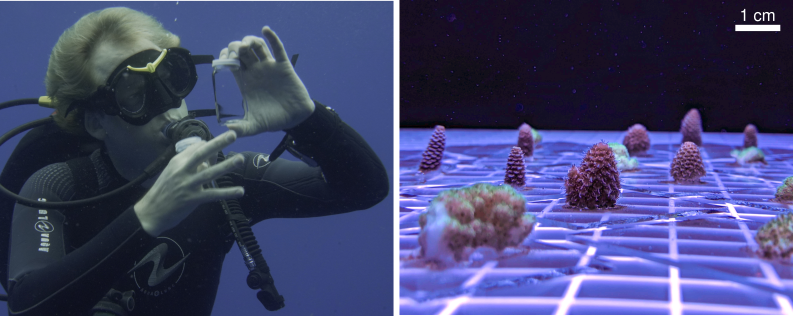
  <figcaption>Capturing foraminifera in the field (left) and growing corals in the lab (right).</figcaption>
</figure>

<h2 id="training-provided">Training Provided</h2>

<ul>
  <li>Culturing methods for marine organisms:
    <ul>
      <li>laboratory and aquarium control systems.</li>
      <li>water chemistry measurements - major and minor elements, pH, carbon chemistry.</li>
      <li>SCUBA diving for collecting organisms for field culturing.</li>
    </ul>
  </li>
  <li>Geochemical measurement methods:
    <ul>
      <li>ICP-OES and ICP-MS methods for measuring major and trace element concentrations in seawater and biominerals.</li>
      <li>Stable isotope ratio mass spectrometry for measuring carbon and oxygen isotope ratios in seawater and biominerals.</li>
      <li>MC-ICP-MS methods for measuring stable isotope ratios of trace elements within biominerals</li>
    </ul>
  </li>
  <li>Data analysis and interpretation.</li>
  <li>Scientific presentation and writing.</li>
</ul>

<h2 id="applications">Applications</h2>

<p>An <strong>ideal applicant</strong> will have a strong background in natural sciences (chemistry, biology, Earth sciences, physics, etc.), and some or all of:</p>
<ul>
  <li>Have taken courses relevant to this project (e.g. including topics on geochemistry, biominerals and their structure and composition, thermodynamic/kinetic processes).</li>
  <li>Have some practical laboratory experience conducting geochemical measurements or growing marine organisms.</li>
</ul>

<p>If you’d like to find out more about what it’s like to work here, please feel free to contact <a href="/people/">anyone on the team</a> and ask us anything!</p>

<p><strong>Applications for this position are now closed.</strong></p>

<!-- ### Application Instructions
Applications should be submitted via the [University of Cambridge Graduate Application Portal](https://apply.postgraduate.study.cam.ac.uk).

General instructions for the application portal can be found [here](https://www.postgraduate.study.cam.ac.uk/application-process/how-do-i-apply), but a few specifics steps for applying to this project are:

1. After logging in to the application portal, open the Course Directory.
2. Type 'Earth Sciences' in the search box, and select the 'Earth Sciences PhD' course.
3. This will take you to the course description page, where you should click the 'Apply Now' button.
4. Choose a start date of 01-Oct-2024, and select 'Full-Time' study.
5. Click 'Apply for this course', and complete the application form.
6. In the 'Research' section select 'Yes' in reply to 'Do you have any research information to add?', then give the title of this project ('Outside the comfort zone: geochemical changes in marine calcifiers in response to extreme environmental conditions.') and my name ('Oscar Branson') as the supervisor. You do not need to put anything in the 'summary of proposed research' box, but please do list any experience you have that's relevant to the project in the 'Research Experience' box.

[Apply Here](https://apply.postgraduate.study.cam.ac.uk){: .btn .btn--info}

Applications Deadlines:

- **International Students** on 12:00 noon (UTC) on **4<sup>th</sup> January 2024**.
- **UK/Home Fees Students** on 12:00 noon (UTC) on **19<sup>th</sup> January 2024**.

Please [get in touch](mailto:ob266@cam.ac.uk) if you have any questions. -->]]></content><author><name>Oscar Branson</name><email>ob266@cam.ac.uk</email></author><category term="job" /><category term="biomin" /><summary type="html"><![CDATA[Outside the comfort zone: geochemical changes in marine calcifiers in response to extreme environmental conditions.]]></summary></entry></feed>